What matters most: Send your first welcome email right away, within five minutes of signup. Plan a short series of 3-5 emails, and give each one a single goal. Help first and ask later. Then let the series send on its own, and check it often so it stays fresh.
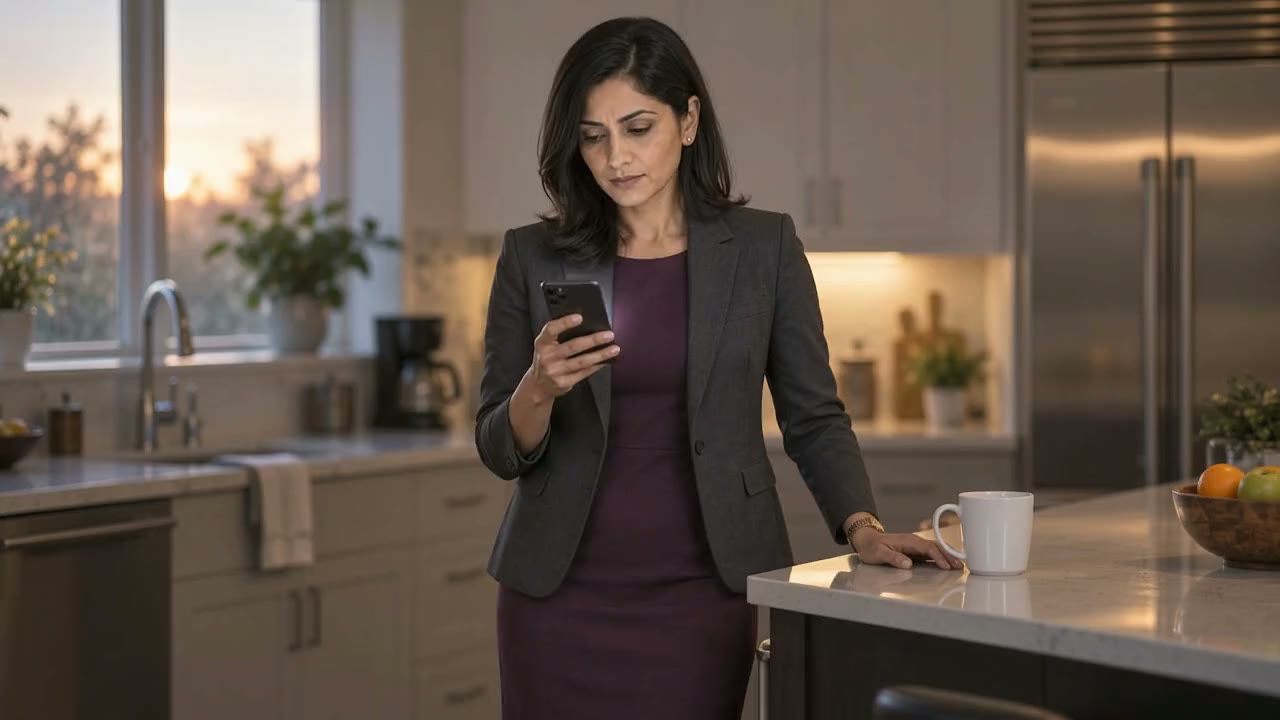
Somewhere tonight, a stranger reads your page twice, types her email into your form and taps the button. In that moment, she's curious and a little hopeful, and she's waiting for you to say hello. On your end, you might not even notice until Thursday. By then, the spark that made her sign up has faded, and she's already looking somewhere else.
Email is still one of the most direct ways to reach someone who asked to hear from you. Even so, many owners treat the welcome email like an afterthought. It goes out as a quick note that says "thanks" and then gets forgotten. But a welcome series may be the most useful thing you ever build. It reaches people at the very moment they raised a hand and said, "I'm interested."
We're Coach Shayla and Coach Carlton. We've spent decades inside Fortune 100, Fortune 500 and Fortune Global 500 companies and small and midsize private firms. We know how often a promising lead goes quiet, and it happens in every kind of business. Someone finds you, reads your page and maybe downloads your free guide, and then nothing else happens.
There's no call, no reply and no sale. More traffic or a nicer logo won't solve that, and it isn't a sign that your work isn't good enough.
What helps is a short series of emails that builds trust while her excitement is still fresh.
In this article, we'll show you how to build a welcome series that brings you more clients, one step at a time. You'll see why the first email matters most and what to write in your first three. Then we'll show you how to share proof, make an offer that feels natural and set it all to run while you sleep. The goal isn't a bigger list. It's a booked call with someone who already trusts you.
If you sell through real conversations, this is the series that turns quiet interest into one. We'll show you exactly how to build it, so you can stop wondering where all those signups went.
Key takeaways
- Send the first welcome email within five minutes of signup, when your new subscriber's interest is at its highest.
- Build your welcome series with 3-5 emails, and give each one a single clear goal and one next step.
- Share something helpful in your early emails before you make any offer, so trust has time to grow.
- Automate the whole series so every new subscriber hears from you on time, every time.
- Check every link, offer and example in the series often, so it stays fresh and keeps working for you.
Why Your First Email Matters Most
Here's a choice to make today. Will a new subscriber hear from you in the next five minutes, or sometime next week? That one decision shapes everything that follows. Your first email arrives when her interest is at its peak. It also tells her inbox if your future emails deserve attention. So send it right away, ideally within five minutes of signup, because the first few days matter most while her excitement is still high.
The story below is an illustration, not a client case. Meet Carmen Delgado, who runs a small service business. She often sees people like Tom Brennan ask about her work and then go quiet. A slow first email can be the reason Tom never takes the next step.
Tom filled out her form on a Tuesday afternoon, curious and ready to learn more. By Thursday, when Carmen finally wrote back, he'd already moved on to someone else who answered faster.
The moment had passed, and Carmen didn't even know she'd lost it.
Many businesses get this part wrong. Some never send a welcome email at all, and others send it days later. That leaves a lot of quiet interest sitting on the table.
It's a common pattern inside companies of every size, where a lead arrives, the system waits and the lead cools off. The answer isn't complicated.
It comes down to a simple decision about speed.
Your first email does more than say hello. It sets the tone, and it helps decide if your future emails land in the inbox. When Tom opens that first message quickly and clicks a link, his email provider notices. That early interest is a signal that your emails belong in his main inbox, not the spam folder.
Worth sharingA slow or absent first email teaches the opposite. Your future messages then have to fight harder just to be seen.
In those first few minutes, your first email has three jobs to do:
- It delivers whatever you promised at signup, whether that's a guide, a checklist or a simple thank you.
- It tells your reader what comes next and how often she'll hear from you.
- It asks one easy question that invites a reply, because replies help your emails reach the inbox.
That last point matters more than most people realize. A reply from Tom tells his inbox that this is a real relationship, not a mass mailing. It also gives Carmen a warm reason to write back to him personally.
So your first email is never only a formality.
Delays can lower your open rates by a lot. The subscriber who was ready on Tuesday is busy and distracted by Friday. Her moment of highest attention is short, and it rarely comes back with the same strength. Carmen can't re-create Tom's first burst of curiosity, but she can meet it while it's happening.

Building a Welcome Sequence of 3-5 Emails
Open your email platform, create a new automation and set it to start when someone new subscribes. A welcome series of 3 to 5 emails builds trust and moves people forward much better than a single message. One email says hello, but a short series says, "We're worth paying attention to."
Think about what usually happens to a single welcome message. It gets opened, maybe clicked, and then it's forgotten. A short series works better for a simple reason, because each message gives your reader one more reason to remember you.
Some sources suggest stretching the series to 3-7 emails, but we think that's too many for most service businesses. The sweet spot is 3 to 5, because fewer than three feels rushed.
More than five starts to feel like noise in a busy inbox.
Your reader has a full life, and a short series shows her you respect that.
Why One Email Isn't Enough
Think about how people really buy from a coach or a consultant. They don't sign up and book a call right away. Instead, they sign up, look around and wait to see what you're like.
Worth sharingThey want to know if you understand their problem. They want to see if your advice actually helps.
One email can't carry all of that work by itself.
Meet Juno Park, who works part-time for Carmen Delgado. Juno helps Carmen stay in touch with new customers and people who reach out.
Without a clear plan, Juno ends up sending random updates. Some weeks the new contacts hear nothing at all.
Other weeks they get three messages in a row, and that mix of silence and noise leaves people confused.
Juno needs a plan where every message has a purpose, and that's what a series of 3-5 emails gives her. It takes away the guessing. She knows exactly what to send and when to send it, and she can finally stop worrying that she's getting it wrong.
That kind of plan is what we build with you in Sales Funnel Academy, our self-paced school for service businesses. Early on, you go from one free thing to a live opt-in page, a five-email welcome series and a booking page. You finish one piece at a time, at your own pace, so nothing piles up on you.
One Goal for Each Email
Each email in your welcome series should have one main goal and one clear next step. This simple rule keeps your series from turning into long, wandering newsletters. Email one delivers what you promised, and email two shares your story.
Email three gives a helpful tip, and email four shows proof.
Email five makes a clear and friendly offer.
Here's what that looks like as a simple checklist:
- Email 1 delivers your free resource and tells people what to expect.
- Email 2 shares your story or the mission behind your work.
- Email 3 gives one tip your reader can use right away.
- Email 4 shows proof that your help works for people like her.
- Email 5 makes one clear offer as the next step.
Five emails with one purpose each
- Email 1 delivers your free resource and sets expectations
- Email 2 shares your story or mission
- Email 3 gives one tip people can use today
- Email 4 shows proof that builds trust
- Email 5 makes one clear offer
Notice what's missing from that list. There's no email that tries to do everything at once, and that's the whole point. When Juno sits down to write, she asks one question: "What's this email for?" If she can't answer in one sentence, the email is trying to do too much.
The other way rarely works. A busy owner writes one long email that welcomes people, tells a story, shares three tips and asks for a sale. The reader skims it, feels swamped and deletes it, and that's normal online. Nielsen Norman Group found people read at most 28% of the words on a typical web page (Nielsen Norman Group, 2008). A series solves that by spreading the work across several short, focused messages.
What you say in each email matters too, and email two sounds very different from email five. But the structure comes first. Once the frame is right, the words come much more easily.

What to Write in Your First Three Welcome Emails
What your first three emails say makes all the difference. Email one delivers what you promised and tells people what to expect. Email two shares the story behind your work, and email three gives a helpful tip with nothing to sell attached.
Carmen can use these ideas to answer the questions people like Tom Brennan might have, so he feels understood and interested right away. Tom asked about her services and then went quiet, but he isn't a lost cause. He's a person who needed a reason to stay close until he was ready to talk again.
The Three Emails That Hold Your Series Together
Email one is the handoff. It delivers your free resource, names what comes next and asks one simple question. That question matters more than most people think. Ask new subscribers easy questions and invite them to reply. More of your emails can then reach the inbox, because a reply tells email providers you're worth opening.
Carmen might ask Tom what made him reach out in the first place. He can answer that in one line, and it gives her something real to write back about.
Email two arrives on day two or three and shares your story or your mission. It isn't a life story. It's the reason your business exists, told in a way that connects to your reader's problem. Carmen could share why she started her service business and what she's noticed about the people who come to her.
That gives Tom some context, and he starts to see her as a person instead of a company.
Email three lands on day four or five with a helpful tip or resource Tom can act on. There's nothing to buy in it. It's simply something he can put to use this week. That builds trust while his attention is still warm. The offer comes later, after proof has done its quiet work.
A welcome series isn't about being clever. It's about being useful on a steady schedule your reader can feel, so she starts to look forward to your name in her inbox.
Email one only works if the free thing it delivers is worth opening. If you haven't picked yours yet, that's the exact job of our Lead Magnet Blueprint. In one afternoon, you write your offer in one sentence, test three ideas the same way and pick one, with a date on it.
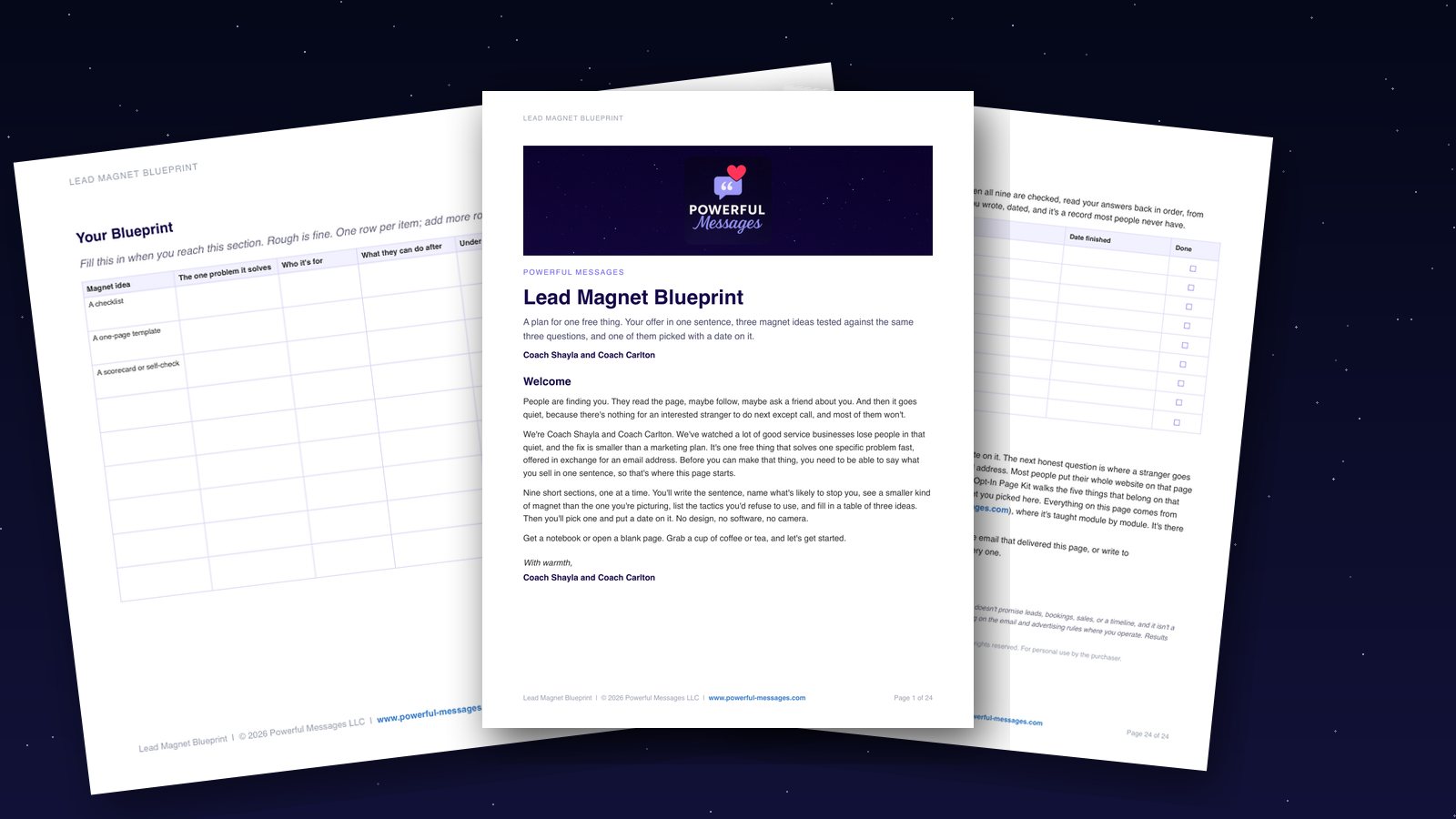
Lead Magnet Blueprint
It helps you share a useful first step that brings the right buyers closer to you.
Get the Lead Magnet BlueprintSharing Proof and Making Your Offer
The idea of giving first and asking later fits right here. People like to give back when someone has helped them. By the fourth and fifth emails, your subscriber has received what you promised, heard your story and gotten a helpful tip.
That series earns you the right to share proof and an invitation. Proof in email four and a clear offer in email five help readers become booked clients.
Carmen can do this without sounding pushy. In her fourth email, she shares a short story about Beatrice Osei, a loyal customer in her sixties. Beatrice came to Carmen with one clear problem. She left with a result she could sum up in one sentence, and Carmen tells it without stretching the truth.
It's one person, one problem and one outcome. That's social proof in its simplest form, a real example that lets a reader think, "That sounds like me."
Many service businesses skip this step. They jump from a tip straight to an offer, and the offer falls flat because nothing backs it up. Proof does the heavy lifting here. Northwestern University's Spiegel Research Center found a product with five reviews is 270% more likely to be bought than one with none (2017). Proof answers the quiet question every subscriber carries: Will this work for someone like me?
Proof lands best when your reader already knows who you help. If that line still feels fuzzy, our Positioning Statement Builder helps you write it in one plain sentence. You'll say who you're for, what you do and why someone would pick you. Every email gets easier to write from there.
What a Clear Offer Looks Like in Email Five
Email five should make one specific invitation, and for Carmen, that's a discovery call. Her offer isn't a discount or a countdown.
It's a simple next step, which is a conversation about the same kind of problem Beatrice solved. The booked call is the win here, not the sale.
How many readers book depends a lot on how well your earlier emails built trust.
We suggest one offer per email. A menu of three options splits attention, and people end up doing nothing. The subscriber who read four emails and felt understood wants one clear door to walk through, so give her that door.
The gap between an average series and a strong one isn't luck. It comes from the right order, honest proof and a clear offer that comes after you've helped, not before.
- Email four shares one customer story with a clear before and after.
- Email five offers one invitation, such as a discovery call or a starter package.
- Neither email uses urgency, pressure or a pile of different offers.
Automation keeps your series steady, but the words still need a human check every few months. An old story or a broken booking link can quietly wear away the trust your first emails built. Your proof and your offer are what turn readers into clients, so give them the same care as your welcome.
Automating Your Sequence and Keeping It Fresh
A welcome series that lives only in your head can't help anyone. It's easy to write three lovely emails and send them by hand for a week. Then a big client project fills your calendar, and it all falls apart. Automation takes care of that for you. Every new contact gets the same quick attention, whether she signs up at 2 p.m. on a Tuesday or 2 a.m. on a Sunday. The series runs while you sleep. Your first email still lands within minutes, and the rest follow on time without you lifting a finger.
But automation doesn't mean you can set it and forget it. We build our own schools, products and apps with AI every day, and we've learned that the tools change fast. What worked in January can look old by July, so here's what we suggest you check on a regular schedule:
- Check every link in the series, including your booking page and your free download.
- Look at any offer in the emails, so it still matches what you really sell today.
- Update dates, names and examples that could quietly go out of date.
- Refresh your subject lines and preview text, which do better with new wording every few months.
These checks matter more now, because what readers expect has changed. AI tools make it easier to send emails that feel personal. So people now expect emails that feel timely and made for them, and a series that ignores what they clicked feels older than it used to. You don't need to rebuild the whole thing every month. Instead, treat it like something living that you care for, not a file you wrote once and forgot.

There's also an inbox reason to pay attention. Google announced that from February 2024, Gmail would require bulk senders to follow stricter rules, including one-click unsubscribe (Google, 2023). If your series doesn't follow those rules, fewer of your emails reach the inbox at all. That's a quiet problem with a big cost. You could write the most thoughtful five-email series in the world, and it won't matter if it lands in spam.
Worth sharingSkip the temptation to automate and walk away. The sequence is only as good as its last review.
Conclusion
Your welcome series is where a stranger decides if she'll ever open another email from you. Send the first one within five minutes of signup, and it sets the tone for all the rest. A series of three to five emails does the quiet work of turning curiosity into trust, and trust into booked calls.
Building our own systems has taught us that a welcome series isn't a marketing trick. It's a handshake, and each email has one job. It keeps your promise, tells your story, gives something useful, shows proof and then makes one clear offer.
Automation handles the timing, so no new subscriber has to wait on your calendar. The first few days matter most, because her excitement peaks right after she signs up.
Here are the ideas worth carrying with you:
- Send your first email right away, within five minutes of signup, while interest is highest.
- Keep the series to three to five emails, each with one clear goal and one next step.
- Give before you ask, because trust comes first and the offer comes later.
- Automate the whole series so every new subscriber gets the same warm welcome, every time.
- Check the series often, because broken links and old offers can quietly cost you clients.
If the whole series still feels out of reach, start with the free thing that feeds it. The Lead Magnet Blueprint helps you plan the one free thing that turns quiet interest into an email address. That's the very first step a welcome series needs. It takes one afternoon, and you leave with one sentence and one clear pick.
Picture next month, when someone new signs up while you're out at dinner. Your warm hello reaches her within minutes, and a few days later, she books a call because she already feels like she knows you. Build the handshake first, and the clients have a clear way to follow.
Where to start this week
If you'd like one small step, start with the sentence every email grows from. Write it with the Positioning Statement Builder. Then plan the free thing your first email delivers with the Lead Magnet Blueprint. If you want the whole path built, from the first download to a booked call, join Sales Funnel Academy and work through it at your own pace. And if you'd rather talk it over first, book a Discovery call. It's a relaxed 30 minutes with Coach Shayla and Coach Carlton about your first few emails. It starts with a small deposit that is credited toward your next call or the 5-Day Challenge.
 Carmen DelgadoA service business ownerMeet Carmen →
Frequently asked questions
What is a welcome email sequence?
It's a short series of emails that go out on their own after someone joins your list. It introduces your business and delivers what you promised. It tells people what to expect and gently guides them to a first step, like booking a call. It's your first real chance to build trust.
How many emails should be in a welcome sequence?
For most service businesses, 3 to 5 emails works best. A short series gives people several chances to get to know you, which one email can't do on its own.
When should the first welcome email be sent?
Send your first welcome email right after signup, ideally within 5 minutes. Waiting can lower its open rate by a lot, because a subscriber's excitement is highest in the first few days. An automation tool helps it go out on time.
Can I sell in my welcome email sequence?
Yes, you can include an offer, especially if it fits what people signed up for. Even so, it's best to build trust and give real value before you ask for a sale. The last email in a series of 3-5 is often the best place for your offer.
How do welcome emails perform compared to regular emails?
Welcome emails reach people right after they asked to hear from you. That timing gives them a real edge over your regular emails.
What should my first welcome email deliver?
It should deliver the free thing they signed up for, right away. Our Lead Magnet Blueprint helps you plan that free thing in about two hours, with no design work and no software.
Is there a course that walks me through building the whole sequence?
Yes, there's one built for this. In Sales Funnel Academy, you build a five-email welcome series as one of your first finished pieces, at your own pace.
Can someone look at my welcome emails with me?
Yes, we'd be glad to. Book a Discovery call and spend 30 minutes talking it through with both of us. It starts with a small deposit that is credited toward your next call or the 5-Day Challenge.
Sources
- Neil Kumaran, New Gmail protections for a safer, less spammy inbox, Google (The Keyword blog), October 3, 2023
- Spiegel Research Center, Northwestern University, How Online Reviews Influence Sales, 2017
- Jakob Nielsen, How Little Do Users Read?, Nielsen Norman Group, May 5, 2008
Recommended for you
Lead Magnet Blueprint
helps you share a useful first step that brings the right buyers closer.
Get the Lead Magnet Blueprint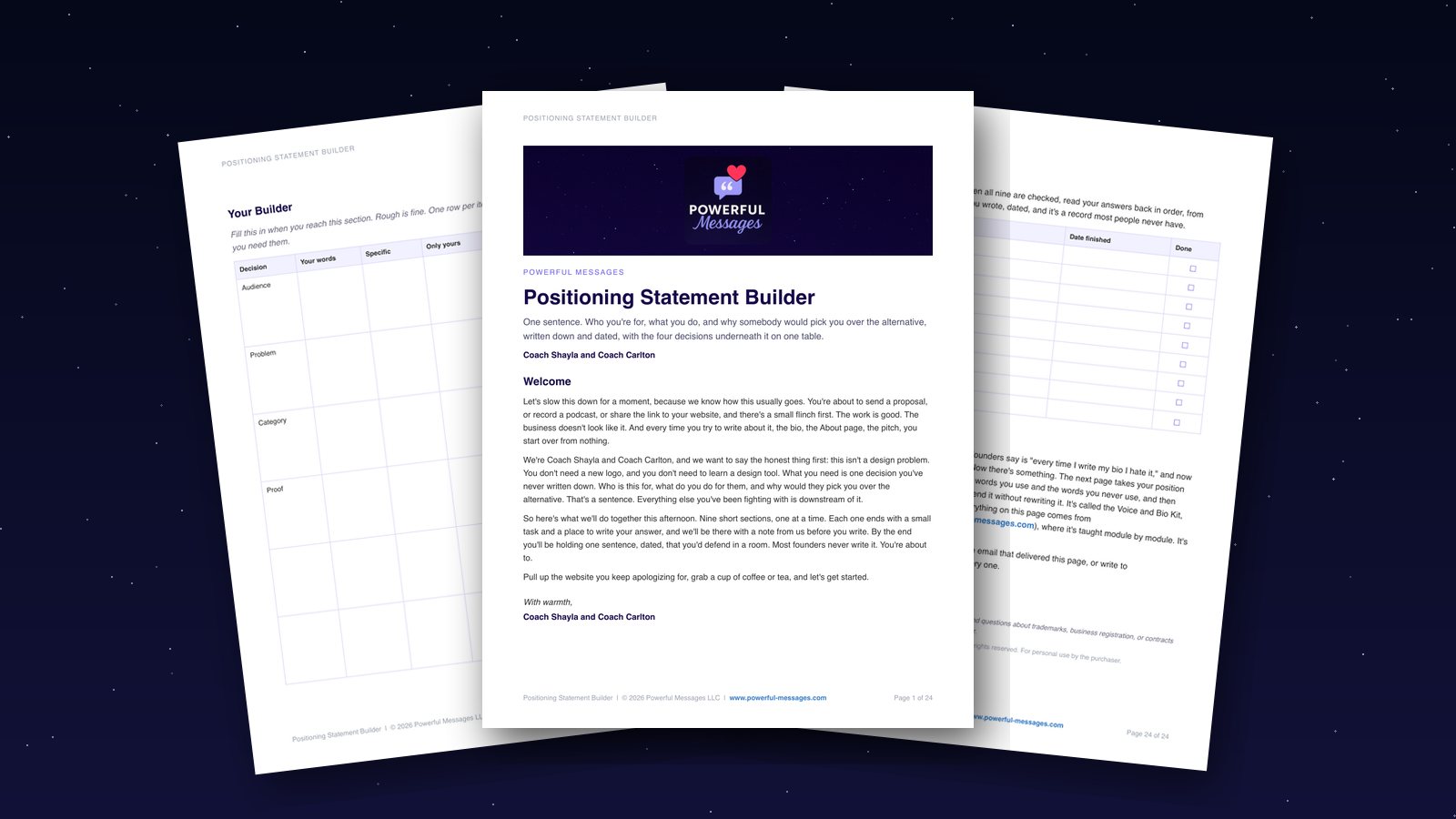
Positioning Statement Builder
helps you say who you help and why your work matters in one clear line.
Get the Positioning Statement BuilderSales Funnel Academy
Build a sales path that books clients
Explore the school