Key point: People download your freebie and don't book a call when the freebie's promise and the call's offer feel like two different things. The freebie may solve the wrong problem, the next step may be unclear or the call may not sound worth the time. Sometimes the reader isn't ready yet or the audience is too broad. The freebie might give too much or too little, or trust may not have had time to grow.
You're waiting for the kettle to boil when your phone buzzes with a little note: someone new just downloaded your free guide. You smile and feel a small lift. An hour later you check your calendar, and then you check it again after lunch, but no one has booked a thing.
If that quiet feels personal, we want you to hear this first. It isn't because your work is bad or because people are flaky. Most of the time, it comes down to a gap between what your freebie promises and what your call offers. The two feel like different conversations.
The person who downloaded your guide wanted one thing, and the call you asked them to book sounds like something else entirely.
Let's look at Carmen Delgado. She runs a small service business with a part-time employee named Juno Park. Carmen built a helpful freebie, shared it and watched the downloads come in.
The story below is an illustration, not a client case.
Then she waited for the calls, and they didn't come.
We'll use Carmen's story to show you the hidden gaps that keep interest from turning into action.
We spent years in data, strategy and sales. Coach Shayla led people analytics at large global companies, reading what employees really felt beneath the surface. Coach Carlton sold software to senior leaders, learning why people say yes and why they go quiet. Between the two of us, we've seen this pattern from both sides of the table.
By the end, you'll understand the main reasons a freebie download doesn't turn into a booked call. Even better, you'll know what to change so your next step feels obvious instead of optional.
Key takeaways
- Make sure your freebie solves a "must-have" problem, not only a "nice-to-have" one.
- Give a clear, direct invitation to the next step that says what to do and why.
- Make your call sound worth it by naming exactly what people will walk away with.
- Remember that not everyone who downloads is ready for a call yet, so keep the relationship warm.
- Aim your freebie at one specific audience so the right people find it.
- Balance your freebie so it gives enough to build trust but not so much that it replaces your paid offer.
Your Freebie Might Not Solve the Right Problem
A freebie that solves a small or off-target problem won't lead to booked calls. That's because it doesn't show why working with you would help. The download happens, and the call doesn't. The reason often sits inside the freebie itself, not in your follow-up emails or what you say on the call.
We saw this pattern in the companies where we worked. People would complain about one thing in a survey while a deeper issue sat underneath it. Coach Shayla spent decades leading people analytics at large global companies, partnering with the C-suite and board on retention, development and workforce planning. The surface answer was rarely the real one.
Your freebie works the same way. It might answer a question your audience asks out loud, while the problem they really need solved is quieter, bigger and more urgent.
The Difference Between Nice-to-Have and Must-Have
Let's look closer at Carmen. She offered a guide called 5 Tips for Better Social Media Posts, and people downloaded it.
Juno, her part-time employee, watched the download count climb, but the calls didn't follow.
Carmen's clients didn't need five tips for better posts. What they needed was help building a steady content plan. The freebie solved a surface problem, and the real pain of showing up week after week with something to say stayed untouched.
That's the gap. A nice-to-have freebie feels helpful in the moment, while a must-have freebie speaks to the problem that keeps your ideal client up at night.
One gets downloaded, and the other gets acted on.
Tom Brennan is a good example. He asked about Carmen's service and then went quiet, and he didn't need better captions. He needed a way to show up steadily without burning out, and the freebie never touched that.
So how do you find the real problem? Listen for the words your ideal client uses when they talk about their frustration. Listen for the tired version, not the polite one.
Worth sharingA freebie should offer a small win people can feel. That win has to point toward the bigger change you sell, because if it feels cut off from the real struggle, the reader thanks you and moves on.
Carmen's guide wasn't a bad guide. It was simply aimed at the wrong target, and the fix isn't more tips. It's asking a better question: what does my ideal client need to believe is possible after reading this?
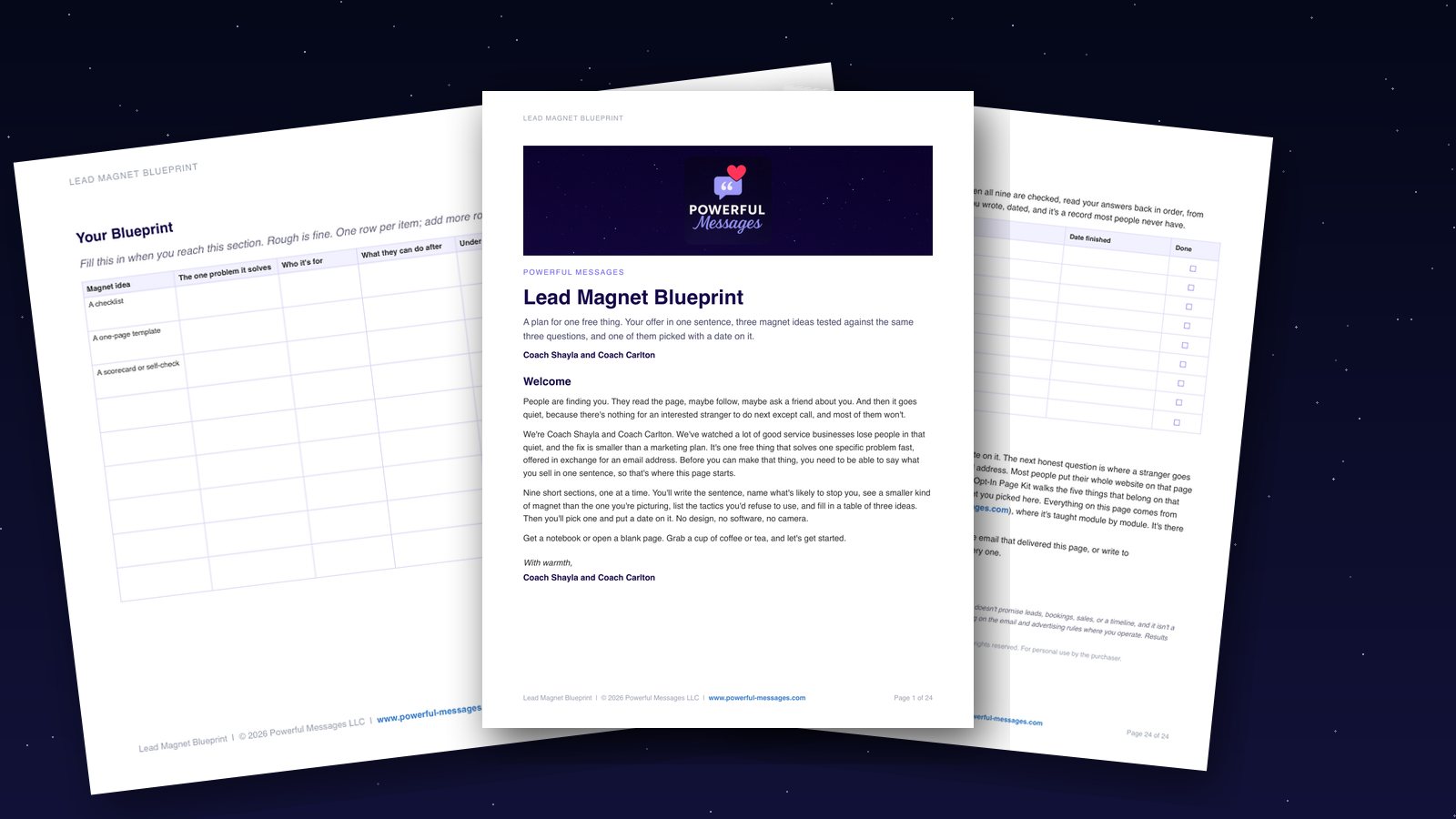
If you'd like help answering that for your own business, that's the exact job of our Lead Magnet Blueprint. In one afternoon, you write your offer in one sentence and test three freebie ideas against the same three questions. Then you pick one and give it a date. The winner is often the answer you already give on every first call.

Lead Magnet Blueprint
Helps you share a useful first step that brings the right buyers closer.
Get the Lead Magnet BlueprintThe Next Step Isn't Clear Enough
A download that leads nowhere feels like a door opening onto an empty hallway. People don't book calls when they can't see the next step. The fix is a simple, direct invitation that tells them exactly what to do and why it matters.
We've seen this in sales for years. A busy leader reads a proposal and then stalls, because confusion stops action even faster than doubt does. When someone isn't sure what to do next, they'll usually do nothing.
Tom downloaded Carmen's freebie on a Tuesday evening. He read the first two pages, nodded at a few points and closed the tab, which is completely normal. Nielsen Norman Group found people read only about 20% of the words on a typical web page (Nielsen Norman Group, 2008). The next morning, he got a plain "Thanks for downloading" email.
It had no link to book a call and no word about what a call would cover.
It gave him no reason to take another step.
So Tom did what most of us do, and he moved on.
What a Clear Next Step Actually Looks Like
A clear next step isn't a "Book a Call" button buried at the bottom of a page. It's a sentence that ties the freebie to the conversation. Here's one example: "When you finish the guide, book a 20-minute call and we will map your first three moves together."
That sentence does three things. It names the action, and it gives a time frame.
It also promises a specific result, and most download pages skip all three.
The invitation should show up in the email, on the thank-you page and at the end of the freebie itself. Saying it more than once isn't nagging, since it's simply good guidance.

People skim, and they miss things all the time.
That's why a single mention isn't enough.
We also see creators soften the ask until it disappears. They write "if you'd like to chat" or "feel free to reach out," and that isn't an invitation. It's a shrug.
A direct invitation sounds more like this: "Book your call here. We will use the time to answer the one question your freebie could not."
We hold ourselves to the same rule. When you book a Discovery call with us, the page tells you up front what the 30 minutes are for. It's a real conversation with both of us about where your business is stuck and what to do next.
A fuzzy path quietly costs you calls. The freebie does its job, and the reader is interested.
Then the path fades and the moment slips away, and that gap between interest and action is exactly where booked calls go missing.
Your Call Offer Doesn't Sound Worth It
A vague call invitation reads like a waste of time instead of a useful next step. Picture someone who downloads a freebie and then sees an offer for a "Discovery Call" or a "Quick Chat." They have no reason to believe the talk will give them something they can use. The call itself has to sound like it solves a problem, not like one more meeting.
We've sat in enough corporate conference rooms to know that busy people guard their calendars. They don't hand over thirty minutes because an invitation sounds friendly. They hand it over because the invitation promises a specific result they want.
Carmen learned this the hard way. Tom downloaded her guide and read through it, and then he ignored her follow-up email inviting him to a "Discovery Call," because he didn't know what he'd discover or gain.
So he did nothing at all.
The freebie wasn't the problem, but the call offer was. It described the format instead of the benefit.
A discovery call is a process, while a valuable call is a result.
Those two things aren't the same.
We'd gently encourage you to name the result right in the invitation. Instead of "book a discovery call," try something closer to "book a call and leave with a one-page plan for your next launch." That sentence tells people what they'll have when the call ends. It turns their time into something built or finished.
Our own two-on-one coaching calls work this way. We design them so you leave with something you can hold, not only notes.
People are busy, and that isn't an excuse. It's a filter.
A call offer that sounds vague gets filtered out before anyone even thinks about it. A call offer that names a clear gain gets weighed against everything else on the calendar.
That moment of weighing is where the decision happens.
Tom wasn't lazy or uninterested, but he simply wasn't convinced yet. The invitation asked for his time without telling him what his time would buy. That makes it a sales problem, not a lead problem.
Before someone can decide to book, they need to picture themselves after the call, holding something they didn't have before. Web research shows the same pull. People often leave a page in 10 to 20 seconds. But a clear promise of value holds them much longer (Nielsen Norman Group, 2011). If your offer doesn't paint that picture, the calendar stays closed.
They Aren't Ready to Act Yet
Decide now whether you're building a sales path for people who are ready today or a relationship for people who are still deciding. Many people who download a freebie are still looking around and aren't ready to book a call. Their timing doesn't match your offer yet, and no clever follow-up can force it.
Corporate sales teaches this lesson over and over. Timing matters a great deal. A perfect answer offered at the wrong time often gets turned down, not because it's bad, but because the buyer isn't there yet.
People make decisions at their own pace. Some download a freebie because they need help this week. Others download it because they're curious, tired or simply browsing on a quiet evening. In your email list, both groups look exactly the same.
Juno noticed something telling while looking over Carmen's download activity. Many of the downloads happened on weekends, which suggests people were browsing rather than looking for help right away. They were gathering options, not booking calls.
Worth sharingThat weekend downloader isn't a failed lead. They're a future lead who hasn't reached the moment of deciding yet. Treating them as a rejection brings frustration, while treating them as a relationship in progress changes everything.
Some business owners chase every download with the same urgency, and it tends to backfire. People who aren't ready feel pressured and pull away, while people who are ready get lost in the noise.
The answer isn't more follow-up. It's noticing where each person stands, because some people need to learn more before they can see the value of a call.
Others need to see proof that your approach works, and a few need time to try other options first.
This is where caring for the relationship matters more than pitching. A simple email series that shares useful ideas, without pushing for a call, keeps you close by when their timing shifts. The goal is to be remembered, not to be pushy.
It gets easier to spot who's ready when you stop treating every download as a chance to sell right now. The weekend browser and the person who needs help today need different paths. Seeing that difference is what turns a quiet list into a full calendar.
Your Audience Is Too Broad
A freebie built for everyone draws in no one who's ready to buy. When we aim a freebie at a wide crowd, the downloads look great, but the calendar stays empty. The reason is simple. General interest isn't the same as real interest.
We saw this pattern in the companies where we worked. Coach Shayla spent decades leading people analytics at large global companies, partnering with the C-suite and board on retention, development and workforce planning. A broad question always got a broad answer. The same rule applies to your freebie.
Carmen learned this when she made a guide called General Business Tips. She wanted small service business owners, and she got hobbyists, students and curious browsers instead.
The download count went up, but the call bookings didn't.
Why Broad Messages Attract the Wrong People
Think of a fishing net with huge holes, which catches everything and nothing at once. A freebie about "business tips" speaks to no specific pain. So the people who grab it have no specific problem you can solve on a call.
In people analytics, a broad message rarely lands deeply with any one group, and low engagement tends to follow. The same thing happens with a freebie aimed at "anyone who wants to grow."
Juno noticed the pattern in the download list. The email addresses came from free accounts, student emails and people who never replied. None of them matched the clients Carmen really served.
A narrow focus often works better. When your freebie names one problem for one kind of person, the right people raise their hands. The wrong people scroll past, which is exactly what you want.
Tom, the person who asked about Carmen's service, wasn't part of that broad crowd. He needed a specific result, and while a general guide didn't speak to him, a focused one would have.
Narrowing your audience can feel scary at first, and yes, you may get fewer downloads. The downloads you do get, though, come from people who need your paid service, and that's a trade worth making.
If you're not sure yet who that one person is, settle it before you build anything. Our Positioning Statement Builder helps you say who you help and why your work matters in one clear line. Once that line exists, choosing the right freebie gets so much easier.
The Freebie Does Too Much or Too Little
Free content follows a Goldilocks rule, because too much replaces your paid offer and too little builds no trust. We see this imbalance all the time. A freebie that solves the whole problem leaves no reason to book a call. A freebie that only scratches the surface makes people doubt you can help at all.
Tom downloaded Carmen's Ultimate Guide to Marketing, and it was so detailed that he felt he didn't need any more help. He never booked a call.
The guide did its job a little too well. It answered every question he had, so the next step felt unnecessary.
That's the quiet danger of giving too much. We're not saying you should hold back value. We're saying you should match the freebie to the size of the problem you solve for pay.
Finding the Middle Ground
A freebie should offer a taste, not the whole meal. Think of a free sample at a bakery, where one bite tells you the quality.
It doesn't fill you up, and the full loaf is the paid service.
When we build self-paced schools and products, we focus on clear, doable steps that don't overwhelm anyone. The same thinking works for a freebie. Give people one clear win.
Show them the method, and save the deeper work of putting it in place for the call.
It is also how we built Sales Funnel Academy, our self-paced school for service businesses. The first three modules take you from one free thing to a live sign-up page, a five-email welcome series and a booking page. You finish one piece at a time, at your own pace.
Too little creates the opposite problem. A vague checklist or a list of obvious tips doesn't build trust, because it tells the reader you have nothing deeper to offer. So they walk away thinking the call will be more of the same.
The balance lives in the gap between what they can do alone and what they need help to finish. Show them the first three steps and let them feel progress. Then make it clear that the next five steps call for a conversation.
Tom's guide missed because it closed that gap completely. A shorter guide with a clear stopping point would have left him curious. Curiosity is what books calls, while too much detail is what stops them.
You Haven't Built Enough Trust Yet
People often download a freebie from someone they don't yet believe can help them. That gap between useful content and earned trust is where booked calls go quiet. A download is a small yes, and a call is a much bigger yes. Trust is the distance between them.
We saw this pattern in the companies where we worked. A well-made resource would get attention, but attention isn't the same as commitment.
People read, nodded and moved on. They had no reason to believe the person behind it could handle a real talk about their specific problem.
Tom found Carmen's freebie useful. He read it, saved it and even tried one idea, but when her follow-up email invited him to talk, he held back.
He didn't know much about her business or her background, and to him she was only a name on a download page.
That hesitation isn't rudeness, since it's a quiet way of protecting yourself. A call asks someone to be seen, to admit they need help and to open up to a stranger. None of us does that without some sign that the stranger is safe and capable.
Trust is built in layers, not in one download. The freebie is the first layer, and it proves you can explain an idea clearly. It doesn't yet prove you can guide a person through real change, and those are two different promises.
Carmen's guide was good, but good content alone doesn't earn trust. Trust grows when people see you again and again. They notice a steady voice, a clear point of view and small signs that you understand the problem deeply. One guide can't carry all that weight.

Think of it like meeting someone at a party. A good opening line gets their attention, but you wouldn't hand them your house keys five minutes later.
First you talk, you listen and you show who you are. The call is the house key.
Worth sharingA steady message matters here. When every email, post and resource sounds like the same person with the same values, trust keeps growing. When the voice shifts or the message feels generic, trust stalls, because people sense a mismatch faster than they sense skill.
Follow-up plays a part too, and it's about being present, not about pressure.
A single email after a download is easy to ignore. A short series can add value, share a story that fits or offer a fresh angle. Each email gives the reader one more chance to decide you're the real thing.
Tom never booked because Carmen never gave him enough reasons to believe she was the right person to talk to. The freebie did its job, but the trust-building didn't.
That missing layer is exactly what makes the next step feel risky instead of obvious.
In 2026, the path from freebie to call has to feel like a hallway, not a cliff. Your call becomes the obvious next step when the freebie points to it, names the benefit and takes away the guesswork. People don't book when they can't see the bridge, so it's on us to build it for them.
Senior leaders tend to say yes more easily when they can see a clear, logical path. Most people like being guided, and they don't want to figure out what comes next all on their own.
Put the Invitation Inside the Freebie
Carmen started adding a "What to do next" page to the end of her freebie. It explained the benefits of a two-on-one strategy call with her and Juno, and that one page changed how readers finished her guide.
Before that page, the guide simply ended with a summary paragraph and then silence. Readers closed the file and went on with their day.
Now the final page says exactly what the call covers. It names who joins and explains what the reader gains in twenty minutes, so there's no pressure, only a clear door.
We think the last page is the most overlooked spot in any freebie. It's where attention peaks, so that's where the next step belongs.
Your follow-up emails can then point back to that same page. The message stays steady, and because the reader already saw the invitation once, the email feels familiar instead of pushy.
This isn't about adding more steps. It's about closing the gap between finishing the guide and knowing what to do, so interest can turn into action without a bump.
A stronger plan starts with this one fix. Make the call feel like the natural ending of the freebie instead of a separate ask.
Bringing It Together
The download isn't the problem. The gap between the download and the call is. When someone grabs your freebie and goes quiet, they aren't rejecting you. They're telling you the next step didn't feel obvious, worthwhile or safe enough to take.
We've watched this pattern in boardrooms and in small businesses alike. The fix is rarely more content, but it's usually more clarity.
Here's what matters most from everything we covered:
- Solve one specific problem well. A freebie that tries to help everyone ends up helping no one feel seen.
- Name the next step plainly. Tell them exactly what happens on the call and what they'll walk away with.
- Make the call sound worth their time. If the call sounds like a sales push, they'll skip it, and if it sounds like a working session, they'll show up.
- Match the freebie to the call. Your freebie should raise the very question your call answers.
- Build trust before you ask. One download isn't enough history for most people to book a conversation.
Four steps from interest to a call
- Solve one specific problem well.
- Make the call sound worth their time.
- Match the freebie to the call.
- Build trust before you ask.
So why do people download your freebie but never book a call? Usually, it's because the bridge between interest and action isn't built yet. You build it with a tighter promise, a clearer next step and a call offer that sounds like help, not pressure.
Today, open your freebie and read it the way a stranger would, and then read your call invitation right after it. Ask yourself one question: does the second feel like the natural next move after the first? If it doesn't, rewrite the call description until it does.
Clarity is what turns interest into calls, and everything else is decoration.
Where to start this week
If you'd like the plan for your one free thing finished this week, start with the Lead Magnet Blueprint. It takes about two hours, with no design work and no software. When you want the whole path built from that first download to a booked call, join Sales Funnel Academy and build it step by step. If you're still unsure who your freebie is for, the Positioning Statement Builder helps you settle that first. And if you'd find it easier to talk it through, book a Discovery call with Coach Shayla and Coach Carlton.
 Carmen DelgadoA service business ownerMeet Carmen →
Frequently asked questions
Why aren't my freebie downloads turning into booked calls?
Often, the freebie doesn't show a clear next step. It may not solve a pressing enough problem to make a call feel worth it. It might also draw in the wrong audience, or the call offer itself might not feel exciting. The fix starts with making sure your freebie's value lines up with your paid service.
How can I make my freebie better at bringing in calls?
Make sure your freebie solves one specific, small problem for your ideal client. Say clearly what bigger problem your paid service solves beyond the freebie. Then add a direct, low-pressure invitation to book a call, along with what they'll gain from it.
What's a good rate of freebie downloads turning into booked calls?
Rates vary a lot by industry and by type of freebie, so there isn't one "good" number. It helps more to focus on improving your own rate by testing different freebies, call invitations and follow-up emails. Small, steady improvements add up over time.
Is there a simple way to plan a freebie that leads to calls?
Yes, and we built one for exactly that. Our Lead Magnet Blueprint walks you through it in nine short sections. You write your offer in one sentence, test three freebie ideas the same way and pick one with a date. Most people finish it in one afternoon, and it comes as a Notion page you copy, plus a printable PDF.
Where can I learn the whole path from freebie to booked call?
Sales Funnel Academy is our self-paced school for coaches, consultants and other service businesses. You build your freebie, sign-up page, welcome emails and booking page. Then you learn to read your numbers and fix the step that loses people.
Can someone look at my freebie and call offer with me?
Yes, we'd be happy to. Book a Discovery call and talk it through with both of us. It starts with a small deposit that is credited toward your next call or the 5-Day Challenge.
Sources
- Jakob Nielsen, How Little Do Users Read?, Nielsen Norman Group, May 5, 2008
- Jakob Nielsen, How Long Do Users Stay on Web Pages?, Nielsen Norman Group, September 11, 2011
Recommended for you
Lead Magnet Blueprint
helps you share a useful first step that brings the right buyers closer.
Get the Lead Magnet Blueprint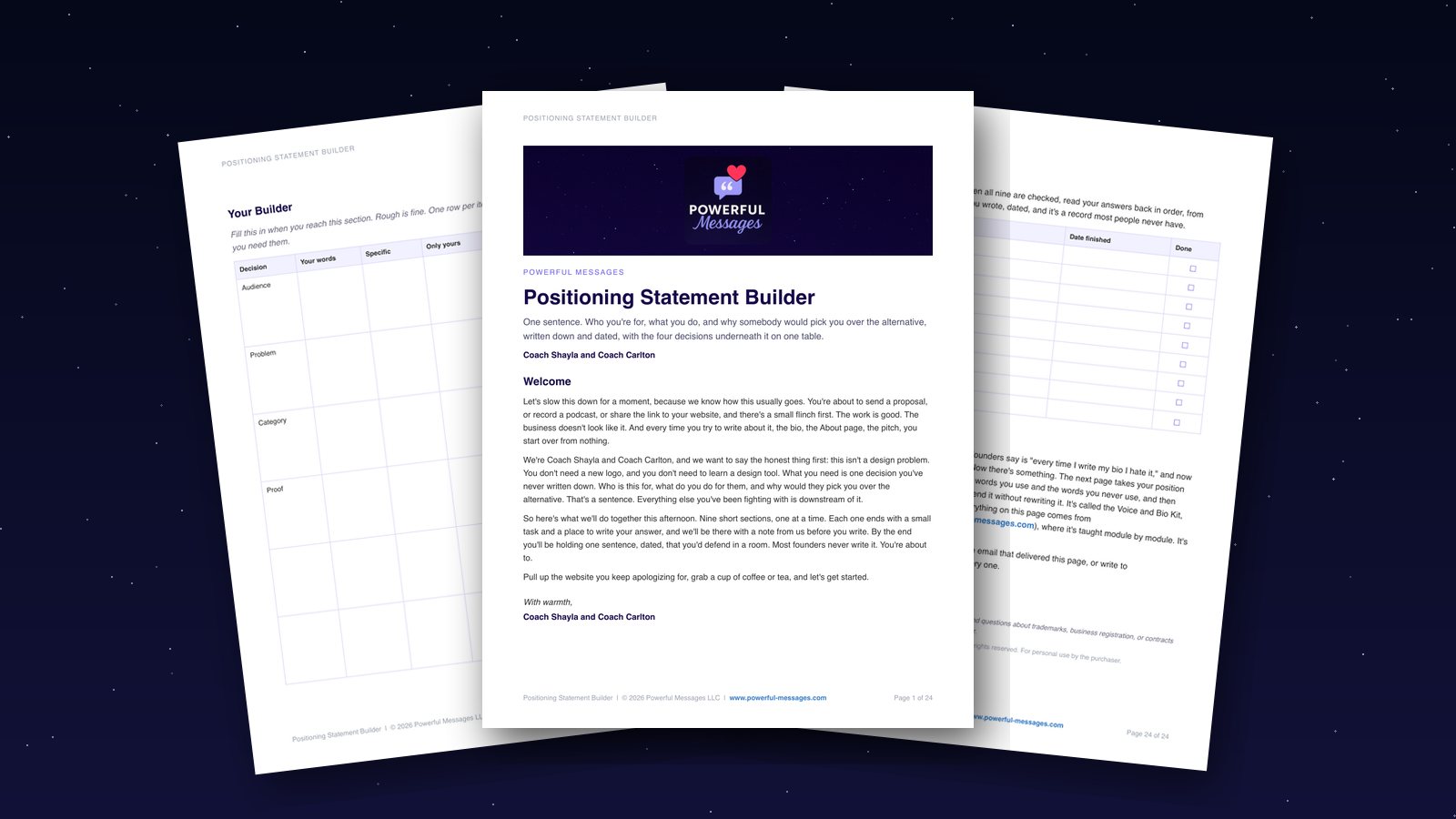
Positioning Statement Builder
helps you say who you help and why your work matters in one clear line.
Get the Positioning Statement BuilderSales Funnel Academy
Build a sales path that books clients
Explore the school